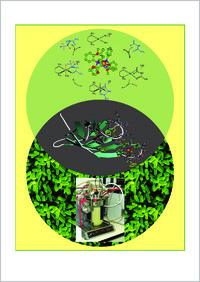
Artificial metalloenzymes for enantioselective catalysis based on the noncovalent incorporation of organometallic moieties in a host protein.
- Ward TR Institute of Chemistry, University of Neuchâtel, Av. Bellevaux 51, CP 2, 2007 Neuchâtel, Switzerland. thomas.ward@unine.ch
- 2005-03-12
Published in:
- Chemistry (Weinheim an der Bergstrasse, Germany). - 2005
Binding Sites
Biomimetics
Catalysis
Enzymes, Immobilized
Models, Molecular
Molecular Structure
Multiprotein Complexes
Organometallic Compounds
Oxidation-Reduction
Protein Structure, Tertiary
Proteins
Rhodium
Stereoisomerism
Streptavidin
English
Enzymatic and homogeneous catalysis offer complementary means to produce enantiopure products. Incorporation of achiral, biotinylated aminodiphosphine-rhodium complexes in (strept)avidin affords enantioselective hydrogenation catalysts. A combined chemogenetic procedure allows the optimization of the activity and the selectivity of such artificial metalloenzymes: the reduction of acetamidoacrylate proceeds to produce N-acetamidoalanine in either 96 % ee (R) or 80 % ee (S). In addition to providing a chiral second coordination sphere and, thus, selectivity to the catalyst, the phenomenon of protein-accelerated catalysis (e.g., increased activity) was unraveled. Such artificial metalloenzymes based on the biotin-avidin technology display features that are reminiscent of both homogeneous and of enzymatic catalysis.
- Language
-
- English
- Open access status
- green
- Identifiers
-
- DOI 10.1002/chem.200401232
- PMID 15761912
- Persistent URL
- https://sonar.ch/global/documents/186349
Statistics
Document views: 16
File downloads:
- Full-text: 0